Formal Continuity Build Up Oeuvre Film Antonioni
Industrial Arts: Michelangelo Antonioni's Red Desert and Minimalism and Land Art
Red Desert presents a new species of the sublime. The film is replete with shots of industrial sites that are equally beautiful and terrifying. These modern environmental settings, while overwhelming and alienating, possess a certain haunting allure. The feature came at a watershed moment in Michelangelo Antonioni's career: it was the first he shot in color. Moreover, as demonstrated in the periodization of the filmmaker's oeuvre by scholar Matthias Bauer, it was made shortly before he began to work globally, shifting from Italian locations to sites beyond his native land.
Matthias Bauer,Michelangelo Antonioni: Bild, Projektion, Wirklichkeit (Munich, 2015), 213, 471.
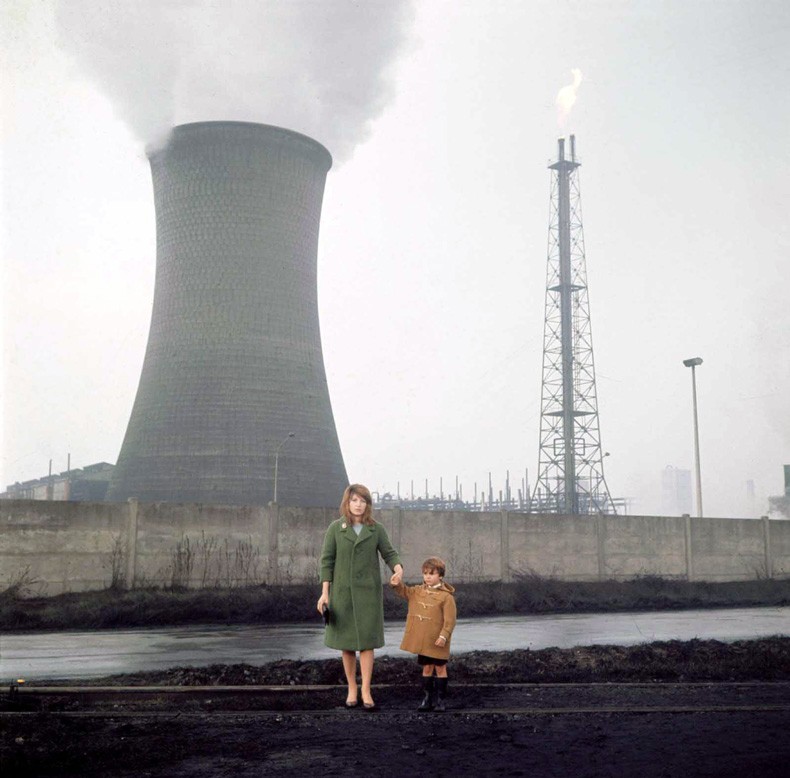
Fig. 1 - Michelangelo Antonioni, Still from Red Desert, 1964, film, Janus Films.
Red Desert eschews traditional narrative progression and instead establishes tone and mood via its imagery and electronic synthesizer soundtrack. Through a series of languorous panoramas, fixed shots, and close-ups, the film follows the activities of Giuliana (Monica Vitti), a beautiful, modern woman married to Ugo (Carlo Chionetti), a wealthy industrialist; she is a denizen of the desolate and toxic landscape that has brought her husband his fortune—his own "private hunting ground" (as he half-jokingly describes it). Giuliana suffers from mental illness, which the film tacitly suggests originates from the lack of intimacy endemic to the alienating conditions of modern life. Following a brush with death in a car accident, which she later confides was a suicide attempt, Giuliana drifts rudderless, scared and confused, through the factory world. Her husband even couches her mental state in mechanical terms, affirming that "her gears don't quite catch" as they used to, a comment which seems to underscore her adoption of the conditions and logics of her inanimate surroundings. For much of the film, she teeters at the edge of an affair with her husband's sensitive and sympathetic business partner, Corrado Zeller (Richard Harris); the relationship is only consummated when he is about to leave for Argentina.
Other vignettes punctuate and disrupt the larger diegetic arc: a strike results in a worker shortage; the bourgeois business elites flirt with the idea of an orgy, but ultimately it does not come off; Antonioni vividly presents the story Giuliana tells her sick child, Valerio, about a girl who lives isolated on a pink beach. Implying a cycle or spiral, Red Desert begins and ends with similar shots of the tragic protagonist, dressed in a striking pea-green coat, and her young son, dressed in yellow, meandering through an otherwise gritty, gray environment (fig. 1).

Figs. 2, 3 - Michelangelo Antonioni, Stills from Red Desert, 1964, film, Janus Films.
The settings of Red Desert are arguably more important than any particular subject in the loose storyline. Giuliana, Corrado, and Ugo traverse the kinds of "nonplaces" that exist at the peripheries of so many modern cities. The anthropologist Marc Augé described nonplaces as anonymous locations "formed in relation to certain ends (transport, transit, commerce, leisure)" not sufficiently remarkable or meaningful that their human users would regard them as places.
Marc Augé,Non-Places: Introduction to an Anthropology of Supermodernity (New York, 1995), 94.
Augé 1995, 31.
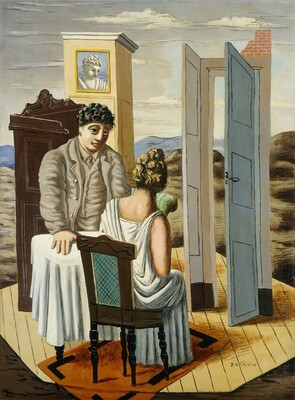
Fig. 4 - Giorgio De Chirico,Conversation among the Ruins, 1927, oil on canvas, Chester Dale Collection, 1963.10.107
Red Desert has often been compared to painting, a link validated to a certain extent by Antonioni's process, as he painted studies and experimented with tinting film in order to prepare for working in color. While Red Desert demonstrates a supreme sensibility for color and composition, Antonioni saw his film primarily as a realist rather than expressionist endeavor.
Barbara Guidi, "'Sono un amante della pittura': Il gusto di Antonioni tra pinacoteca ideale e collezione," inLo sguardo di Michelangelo Antonioni e le arti, ed. Dominique Païni (Ferrara, 2013), 258–263.
Michelangelo Antonioni, "Interview with Michelangelo Antonioni," inInterviews with Film Directors, ed. Andrew Sarris (New York, 1967), 28–29.
James Williams, "The Rhythms of Life: An Appreciation of Michelangelo Antonioni, Extreme Aesthete of the Real,"Film Quarterly 62, no. 1 (Fall 2008): 46–57.
Williams 2008, 46.
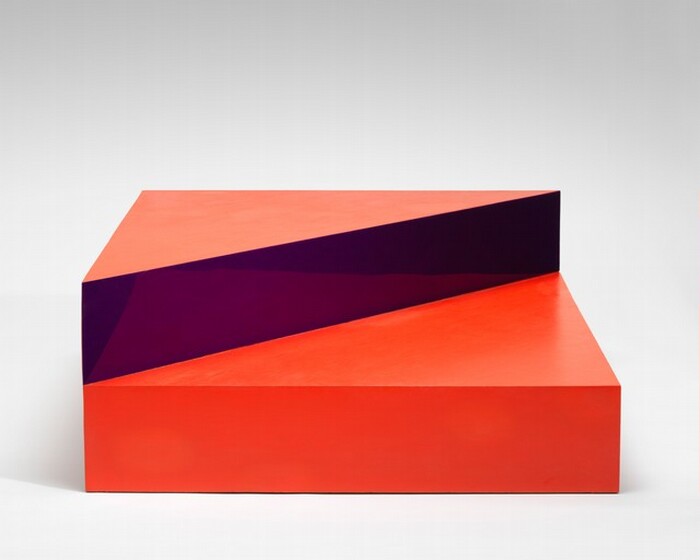
Fig. 5 - Donald Judd,Untitled, 1963, oil on wood with Plexiglas, Patrons' Permanent Fund, 2007.79.1
Antonioni was certainly not alone in his fascination with literal things. In the United States a parallel obsession with the real was part of the zeitgeist, especially in the visual arts and performance. Texts and exhibitions presented the blurring or exploring of the bounds of reality and representation as a requisite aspect of a contemporary aesthetic. For instance, art historian and critic E. C. Goosen's exhibition Art of the Real: American Art USA, 1948–1968 (1968) at the Museum of Modern Art, tech-art champion Jack Burnham's Artforum article "Systems Aesthetics" (1968), and dancer Yvonne Rainer's program for The Mind Is a Muscle (1968) all celebrated art's engagement with reality. Perhaps more than any other tendency of the era, it is to the concurrently emerging field of minimalism that Antonioni's film has the most profound connections.
In his classic "Art and Objecthood" of 1967, critic Michael Fried decried minimal art precisely because of its surplus of "literalism" and for its blending of distinct media (rather than striving for purity in a single medium). While Fried disapproved of the works he analyzed, his insights about minimalism are still valuable. In fact, his description of the operations of art with a "literalist sensibility" and its spectators is almost identical to Antonioni's assertions about objects and characters in Red Desert: minimalism "is concerned with the actual circumstances in which the beholder encounters literalist work."
Michael Fried, "Art and Objecthood," inArt and Objecthood: Essays and Reviews, ed. Michael Fried (Chicago, 1998), 153.
Donald Judd, "Specific Objects,"Arts Yearbook 8 (1965): 183.
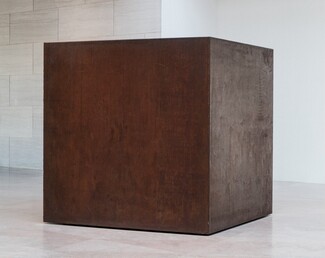
Fig. 6 - Tony Smith,Die, model 1962, fabricated 1968, steel with oiled finish, Gift of the Collectors Committee, 2003.77.1
Minimal artworks by the likes of Robert Morris, Donald Judd (fig. 5), Tony Smith (fig. 6), Carl Andre, or Sol LeWitt typically consist of geometric volumes that bear scant (if any) traces of the artist's hand due to their machine fabrication. According to Robert Morris's accounts of these kinds of sculptural projects, spectators would contemplate them over time and come to an understanding of their forms in space. "What you see is what you see," Frank Stella—a friend and source of inspiration to many minimal artists—declared of his stripe paintings, which are made up of a series of linear sections the width of a stretcher bar (fig. 7).
Frank Stella cited in Bruce Glaser, "Questions to Stella and Judd,"Art News 65, no. 5 (September 1966): 58–59.

Fig. 7 - Frank Stella,Rowley, 1962, alkyd on canvas, Gift of William C. Seitz and Irma S. Seitz, 2004.30.17
While Fried respected Stella's canvases for their reflexive investigation of the medium of painting, the proximity of sculptures by Morris, Judd, and Smith to regular things prompted him to censure the minimalist tendency. The critic concludes "Art and Objecthood" by stating, "Most of us are literalists all our lives. Presentness is grace."
Fried 1998, 172.
Andrew Sarris, "An End toAntonioniennui,"The Village Voice, April 14, 1975, 75–76.
Judd 1965, 184.
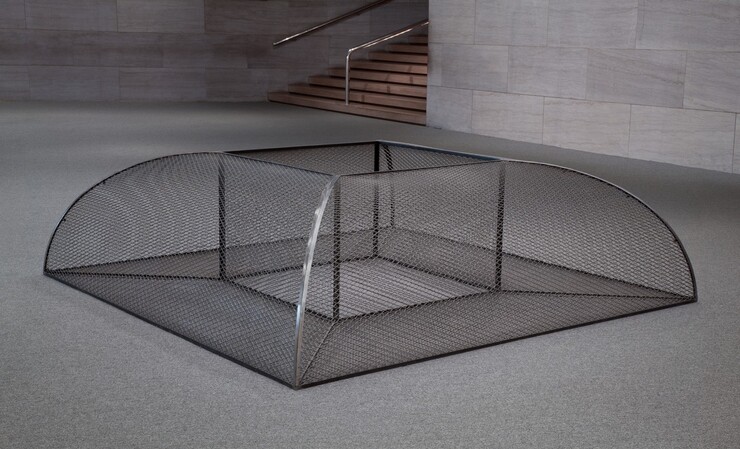
Fig. 8 - Robert Morris,Untitled, 1967/1986, steel and steel mesh, Gift of Edward R. Broida, 2005.142.28
Many of the minimalists proposed alternate ways of conceptualizing art, but it was arguably Robert Morris who most forcefully articulated in writing and facilitated in artworks new kinds of encounters (fig. 8). Morris's work, according to James Meyer, proposed "a contingent and inextricable relationship between a subject and an object."
James Meyer,Minimalism: Art and Polemics in the Sixties(New Haven, 2001), 166.
Antonioni in Sarris 1967, 29.
David Woodruff Smith, "Phenomenology," inStanford Encyclopedia of Philosophy, Winter 2016 edition, ed. Edward N. Zalta, https://plato.stanford.edu/archives/win2016/entries/phenomenology/ (accessed April 28, 2017).
Antonioni in Sarris 1967, 28.
This phenomenological aspect of Antonioni's picture making, his interest in capturing human interactions with material bodies in space, is perhaps most successfully seen in scenes depicting a volume within a volume—a wooden cube, candy-apple red on the inside and milk white on the outside, isolating and insulating a bed within a shack (fig. 9). With shots from inside and outside, the colors oscillate, recalling LeWitt's investigations of color and language in his early artworks, such as his tautological Untitled (Red Square, White Letters) (1962) or the punning three-dimensional "painting" Objectivity (1962, fig. 10). Following moments of progressively mounting sexual energy in this space, which eventually peters out, Corrado and then others break and burn the two-tone cube's slats, thus resolving the spatial boundaries into a single, easily comprehensible interior.
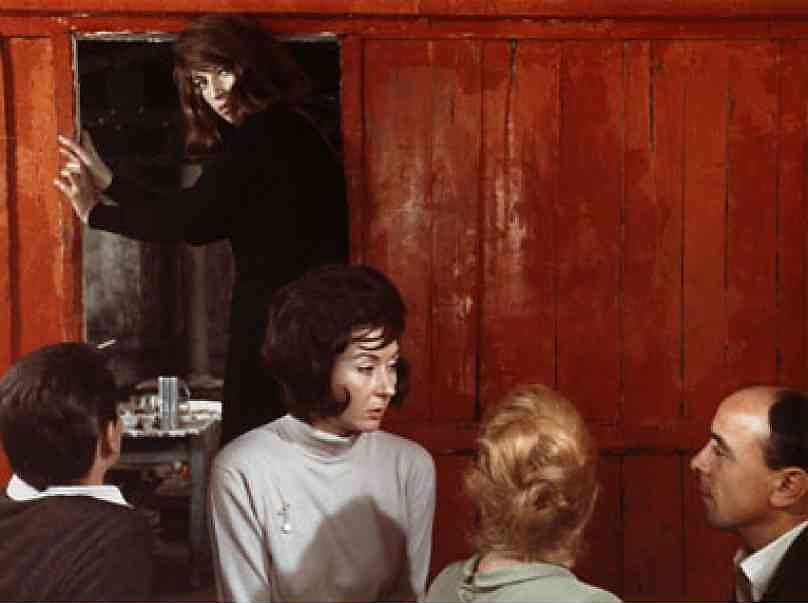
Fig. 9 - Michelangelo Antonioni, Still from Red Desert, 1964, film, Janus Films.
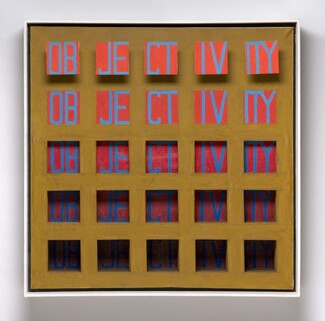
Fig. 10 - Sol LeWitt,Objectivity, 1962, oil on canvas, Gift of the Collectors Committee, 2005.31.1
Commentators on Red Desert have often seen the film as a critique of the "spiritual desolation of the technological age."
Wexner Center for the Arts, "Red Desert," 2012, http://wexarts.org/film-video/red-desert (accessed April 28, 2017).
Antonioni in Sarris 1967, 23.
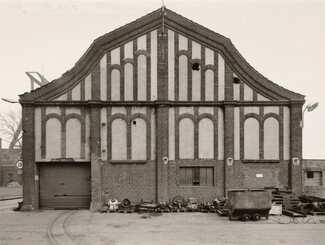
Fig. 11 - Bernd and Hilla Becher,Industriebauten (1), 1988, gelatin silver print, Patrons' Permanent Fund, 2008.30.8.1
Antonioni rather cryptically stated that "the split between morality and science is also the split between man and woman, between snowy Mount Etna and the concrete wall of the housing estate."
Antonioni cited in Mark Le Fanu, "Red Desert: In This World,"Criterion Collection,June 21, 2010, https://www.criterion.com/current/posts/1491-red-desert-in-this-world(accessed April 28, 2017).
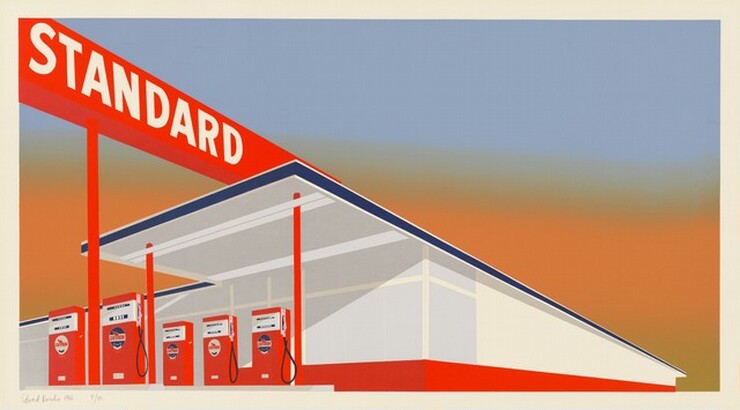
Fig. 12 - Ed Ruscha, Art Krebs, Audrey Sabol,Standard Station, 1966, color screenprint on commercial buff paper, Reba and Dave Williams Collection, Florian Carr Fund and Gift of the Print Research Foundation, 2008.115.257
Smithson's experimental essay "The Monuments of Passaic" (1967) contains images labeled The Great Pipes Monument and The Fountain Monument—Bird's Eye View that could easily be photographs of locations scouted for Red Desert. Playing the role of a real-life Giuliana or Corrado, Smithson even offered tours of the Passaic region. By re- and de-contextualizing the industrial landscape, coupling it with a loose, associative narrative and citations culled from newspapers, signage, and literature in his illustrated text-work, Smithson asks us to consider what exactly the monuments in his study might commemorate. "Has Passaic replaced Rome as the eternal city?" he questions.
Robert Smithson, "The Monuments of Passaic,"Artforum6, no. 4 (December 1967): 48.
In addition to exploring phenomenology in colored celluloid, Red Desert might equally be considered a study of the postmodern ecology. Especially because of the bare-bones plot, the environment becomes the focus and force of the film. A consonant emphasis on environments rather than objects increasingly took hold within the art world in the 1960s and 1970s. A focus on installations, sites outside galleries, and happenings that spectator-participants could actively participate in—rather than autonomous paintings and sculptures contemplated quietly—became the order of the day. Slightly later projects by Smithson, such as Asphalt Rundown in Rome (1969), Concrete Pour in Chicago (1969), and Glue Pour in Vancouver (1970), saw the artist performing "wasteful" industrial actions for no practical purpose. Although his playful use of the materials contrasted with their standard employment, it did reflect serious artistic concerns, as he worked to explore the poetics of entropy. Trucks filled with each of the sticky substances released their contents onto sloped surfaces, resulting in lasting trails that slowly hardened (fig. 13). Like industrial architecture, these pouring pieces were multiply repeatable and could be articulated, reiterated in a distinct medium, across the globe. Smithson's acts of "squandering" mark and pollute marginal spaces before breaking down and being absorbed into the environment around them. The New Jersey native's fossilized flows convert these spaces, at least temporarily for art aficionados, into places. By the film's end, the black slag field, steam vents, and stacks piping out poisonous yellow smoke that Valerio and Giuliana return to seem to have become, for mother and child (and for the birds Giuliana says avoid them), similar sorts of specific sites.
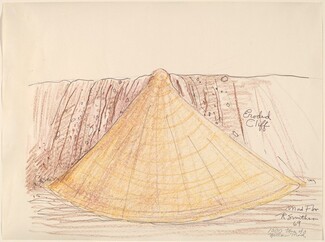
Fig. 13 - Robert Smithson,Mud Flow (1000 Tons of Yellow Mud), 1969, crayon and felt-tip pen over graphite on wove paper, Gift of Werner H. and Sarah-Ann Kramarsky, in Honor of the 50th Anniversary of the National Gallery of Art, 1992.38.1
Nonetheless, much of Red Desert's scenery feels very much unmoored from place, lending the film a sense of homelessness and dislocation. The landmarks in this terrain—the silos, pylons, pipes, freight liners, coal bunkers, gas tanks, and factory facades—are found wherever the tendrils of globalization reach. While the language spoken by most of the characters sets the movie in Italy, the industrial desert is a type of nonplace that could be almost anywhere in the world. Serial structures and forms recur in the architecture of commercial processing and manufacturing, as demonstrated in Ruscha's and the Bechers' numerous series and photobooks. As in these multiplied studies, Antonioni's cut-up vignettes of the modern landscape resist comprehension or mental mapping, and instead feel as though they could occur in spaces just beyond the edges of many metropolises. The placelessness of the film is underscored by Corrado's constant traveling and, further, by the suggestion that workers could be imported and exchanged between different regions in reaction to a strike. Giuliana's disoriented attempts to communicate with the Turkish sailor at the film's end speak to the more tragic isolation that comes with this confusing space of flows.
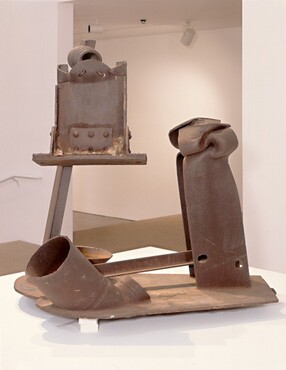
Fig. 14 - Mark di Suvero,Boober, 1965, welded steel, Gift of Edward R. Broida, 2005.142.14
It is common to speak of the "motion picture industry," a turn of phrase that captures film's commercial aspects but perhaps equally encompasses the large scale of image and distribution possible in this medium. Antonioni's complicated lensing and use of wide-screen formats to achieve majestic and sweeping landscape imagery further augment his film's grandeur. Hence, given its industrial overtones, the medium is particularly appropriate for and adept at capturing and transmitting subject matter that is monumentally scaled. Kindred sensibilities to Antonioni's come in the works of Mark di Suvero and Richard Serra. Di Suvero employs weathered steel plates and girders, pipes, axels, nuts, and bolts to produce imposing, heavy-duty forms that have a lineage in cranes, bridges, and pylons as much as in modern sculpture. Works like his welded steel Boober (1965, fig. 14) would be very much at home inhabiting the terrain of Red Desert. Serra's large-scale sculptures also use industrial materials and modes of facture, from hot-rolled steel to massive stone stacks, to cast lead. In such works he explores the aesthetic aspects (rather than the functional side) of modern manufacturing, rarifying them to produce new sets of relations. Many of Serra's projects rely on phenomenological investigations of space. For example, Five Plates, Two Poles (1971, fig. 15) looks foreboding and planar from one side and more rhythmic and pleasing from the other. Serra also works with extremely heavy, large materials, which provoke a mild unease in spectators who stand close to or are enveloped by them. Like Antonioni, Serra explores the industrial sublime and his sculptures are both a little terrifying and alluring.
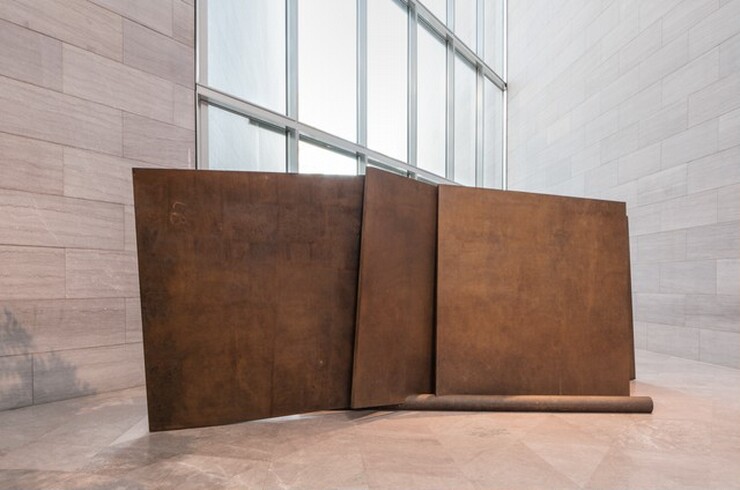
Fig. 15 - Richard Serra,Five Plates, Two Poles, 1971, hot-rolled steel, Gift of The Morris and Gwendolyn Cafritz Foundation, 2001.27.1
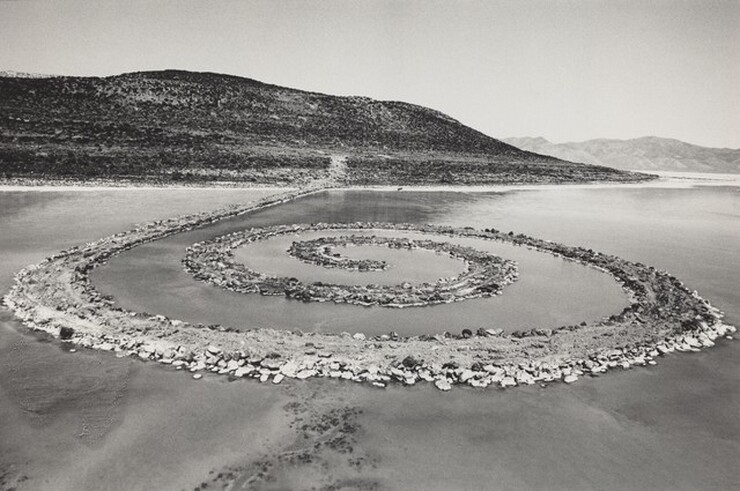
Fig. 16 - Robert Smithson, Gianfranco Gorgoni,Untitled, 1970, gelatin silver print, Gift of Eileen and Michael Cohen, 2011.93.46
When seen on the movie screen, the sheer imposing size of the ships, machinery, and structures in Antonioni's work comes into high relief. Land artists like Smithson and Michael Heizer realized that projected, blown-up images allowed them to similarly emphasize scale. In Heizer's case, his massive photograph of the pit he dug in Germany, Munich Depression (1969), even approaches the hole's actual size. In the same vein, Smithson's breakthrough earthworks, which bridge site and nonsite via photographic and textual means, bring audiences a little closer to locations beyond the walls of the gallery. We might view Antonioni's film as performing a similar function for cinema spectators; once the houselights go down, the theater experience necessarily sends the viewer's mind elsewhere. Indeed, for Spiral Jetty (1970, fig. 16), his monumental backhoe-built rock spiral on the coast of the Great Salt Lake in Utah, Smithson made his own short film as part of the work. He had planned films related to monumental site visits from as early as 1967. Only a few years after Red Desert, Antonioni moved to the Mojave Desert for his own survey of the American West in Zabriskie Point (1970). The desert provides an escape from precisely the kind of overwhelming technological and modern manufacturing landscape profiled in Red Desert.
Matilde Nardelli, "No End to the End: The Desert as Eschatology in Late Modernity,"Tate Papers 22 (Autumn 2014), http://www.tate.org.uk/research/publications/tate-papers/22/no-end-to-the-end-the-desert-as-eschatology-in-late-modernity (accessed April 28, 2017).
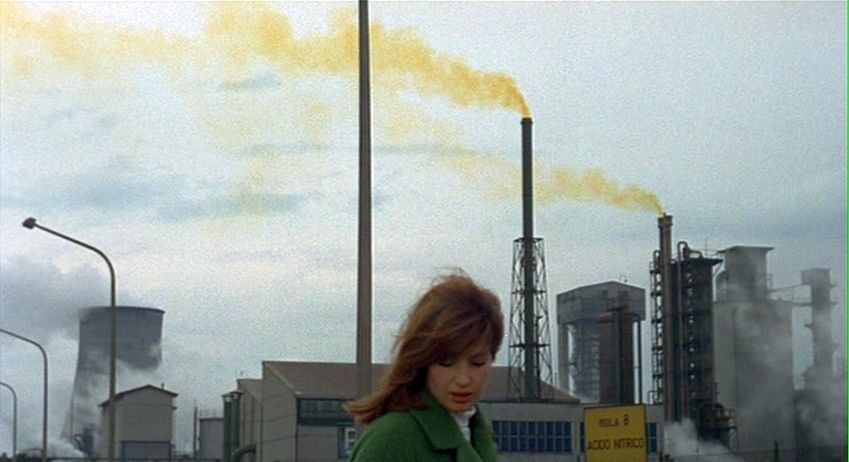
Fig. 17 - Michelangelo Antonioni, Still from Red Desert, 1964, film, Janus Films.
In Red Desert's final moments Valerio asks Giuliana about whether the noxious mustard-yellow smoke emitted from the stacks will harm the birds that flit and soar overhead. They will learn not to fly there, Giuliana tells him. As her acknowledgment of the toxicity of their surroundings signals, modern life and the built environment that structures it potentially yield pathologies both physical and psychic. Nonetheless, perhaps pushing against the overwhelming rationality characterizing our industrial era and its new "monuments" can produce something less lamentable. Finding moments of poetry in the technological environment might liberate us from the strictures of a technocratic existence. By "wastefully" expending energy for aesthetic rather than economic ends, the artworks and film implicitly beg a reassessment of practicality and rationality. The various "industrial arts" discussed in this essay illuminate the many sides—positive and negative—of our contemporary mode of existence. These artistic experiments yield different reactions; with the distance provided by reframing, we can more fully contemplate and comprehend modern life.
Source: https://www.nga.gov/features/new-waves/industrial-arts.html
0 Response to "Formal Continuity Build Up Oeuvre Film Antonioni"
Post a Comment